Acumatica vs. NetSuite: True Cloud ERP Technologies
Choosing the right ERP system for your business is important. With advances in technology, cloud-based ERP technologies are the way of the future. True cloud ERPs (ones that were built for the cloud) allow businesses of all sizes to take advantage of enterprise resource planning software. While there are multiple ERP options to choose from, most businesses typically decide between Acumatica and NetSuite. Here’s what you need to know about both of these ERP options to help you make your choice:
| Features | Acumatica | NetSuite |
|---|---|---|
| True Cloud | Yes | Yes |
| Deployment | Cloud, On-site, Hybrid | Cloud only |
| Mobility | All devices supported | All devices supported |
| Full Functionality | Yes | Yes |
| Export Type | Relational Database Export | Non-relational Export |
| Customization Framework | .NET and C# | Proprietary Software |
| Pricing | Resources Used Only | Resources and User |
| Scalability | Very Scalable | Very Scalable |
Cloud ERP Technologies
Both Acumatica and Oracle’s NetSuite are true cloud-based ERP technologies. What that means is simple: they were built specifically to work in the cloud. Unlike other ERPs and legacy software that was ported and reworked to have cloud functionality, both Acumatica and NetSuite were designed to utilize the power of cloud computing. The ERP software is accessed over the internet using a browser or a mobile app
True cloud ERPs provide a lot of benefits over other types of software including:
- Multi-tenant architecture
- No version locks
- Scalability
- Flexibility
Round Winner: Tie. Both Acumatica and NetSuite are true cloud options.
ERP Deployment
Once you choose your ERP, it has to be implemented and deployed for your business. This is where the differences start to come in between Acumatica and NetSuite. Because they are both true cloud ERP options, you can have simple cloud deployment with either choice.
But that doesn’t work for every business and some need on-site deployment (or a mixture of on-site and cloud). NetSuite only offers cloud deployment while Acumatica offers cloud deployment, on-site implementation, or hybrid choices.
Round Winner: Acumatica for offering multiple deployment options.
Features And Functionality
Choosing either of these options is going to give you access to most industry-standard verticals, with many functions within each category. These include:
- Financial Management
- Financial Planning
- Supply Chain Management
- Fulfillment and Procurement
- Human Capital Management
- E-Commerce and Retail
- Professional Service Automation
- Reporting
- Dashboards
- And More…
No matter which of these options you go with, you are going to get a fantastic ERP solution. They both integrate eCommerce, customer relationship management, business intelligence, and other core functionalities extremely well.
Small differences matter, though, and that may be what leads you toward one software over another. Inventory management, for example, is handled slightly differently in each ERP. With NetSuite, you can easily choose between different accounting methods including LIFO, FIFO, average, or group average. There are many options for Acumatica as well, but it is missing LIFO.
Perhaps a more serious difference is exporting. One thing that Acumatica handles extremely well is its relational database export. Being able to download your data in a relational format is important if you use other solutions for business analytics and reporting or plan on migrating data later on. This type of data export isn’t available with NetSuite so data migration can be very tedious (and expensive).
Round Winner: Again, both of these are fantastic choices for ERP software. If you have a very specific accounting need, NetSuite is the best bet. Because of their export functionality, though, Acumatica may be a safer choice.
Mobility
One of the greatest features of cloud-based ERP technologies is its ability to be accessed, implemented, and utilized via mobile apps. Both NetSuite and Acumatica do a great job with mobility. Neither ERP solution will require special apps to access or use and they are compatible with all devices.
Round Winner: Tie. Both options are great for mobile access.
Customization
Keep in mind that both of these ERP technologies were built in the cloud for a reason. Being able to configure your ERP to suit your business needs (and change them later) is a hallmark of cloud computing, and you are going to have highly configurable software with both of these options.
Customization is slightly different, though. If you need customization for your ERP, your developers will probably have an easier time with Acumatica. Acumatica was built with this in mind and was created with .NET and C#. Oracle’s NetSuite was created using proprietary software and tools which can make it hard to customize (or at the least get expensive to do so).
Round Winner: Acumatica.
Upgrades And Updates
Multi-tenant architecture is one of the main features that separate both NetSuite and Acumatica from other ERP solutions. Multi-tenant models are great because they allow a shared application (all businesses access the same software). This contrasts with single-tenant architecture where every business has a separate application and separate database.
With multi-tenant ERP technologies, all users will be able to constantly upgrade and update to the latest versions of the ERP software (whereas single-tenant options mean each company would have to be updated one at a time).
If an update is pushed out for NetSuite or Acumatica, you will be able to update your ERP software whenever you need to. The big difference is that Acumatica provides that option for free whereas NetSuite makes you pay if you want to update at a time of your choosing.
Round Winner: Both options allow for upgrading and updating, but Acumatica lets you pick the time of updates for free whereas NetSuite makes you pay.
Scalability And Pricing
Cloud software is made for scalability, and neither of these two disappoints. Acumatica and NetSuite are very scalable and can grow to meet the needs of businesses of any size. Even if you started as a small 5-person business and grew into a corporation with thousands of employees, both ERPs would grow with you.
Perhaps the major difference between these two ERP options is the pricing strategy. Both software packages are located in the cloud and you are charged based on the resources you use. NetSuite adds a fee for each user that you have. If you are a small or medium business trying to keep costs low, paying for both resources and users can quickly add up.
With scalability in mind, Acumatica has a pricing strategy that grows only as your business does. With NetSuite, you end up paying that same scaling resource-use cost as well as a fixed cost for the number of users you have.
Round Winner: Both are scalable, but Acumatica’s pricing options are cheaper than NetSuite.
Final Thoughts
Acumatica and Oracle’s NetSuite are both fantastic options for SaaS ERP software. Both providers offer excellent true cloud ERP technologies that will allow you to take care of everything from CRM and accounting to analytics and e-commerce. The differences lie in the small details, though. With relational database exporting, easier customization, multiple deployment options, and cheaper pricing, Acumatica is a great option for businesses of all sizes. If price isn’t a factor, though, NetSuite can perform much of the same; it will just cost more in the end.
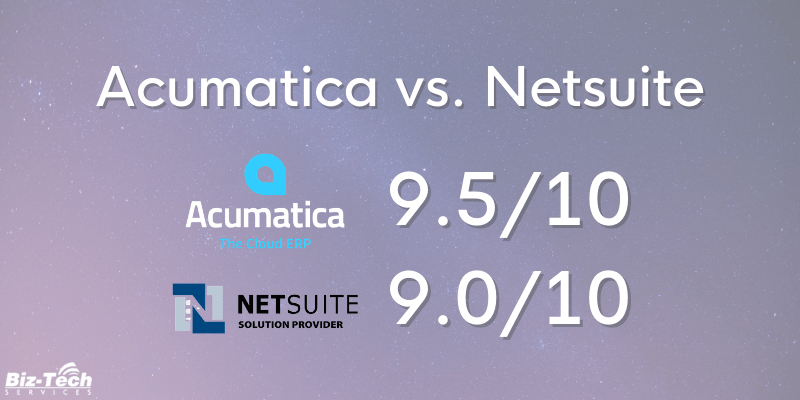
Overall Thoughts: Acumatica 9.5/10, NetSuite 9/10
Here at Biz-Tech, we are certified Acumatica partners and can adapt a variety of ERP products to meet your organizations unique business needs, with full support throughout the implementation process. To see how our knowledgeable ERP consultants could help you take control, contact us.
Logistics And Supply Chain Management: SCM & Logistics ERP
What is logistics and supply chain management? What's the difference between logistics and supply chain management? How does SCM ERP and logistics ERP come into play?
The terms logistics and supply chain management have been used interchangeably for years. Most people say there isn't a difference between the two, and that supply chain management is logistics. To back that claim up, what we consider here in the United States as supply chain management (SCM) is actually known as logistics across Europe. Purchasing, logistics, handling of materials, inventory control and SCM have continuously evolved throughout the years. In the end, this caused many of these functional areas to intersect with each other.
The overlap of these functions has eventually blurred the line between definitions. While these two specific terms (SCM and Logistics) do have some similarities, they are actually different concepts. SCM is a concept that links multiple processes together to achieve a competitive advantage, while logistics correlates with the movement, storage and flow of goods, services and information within the supply chain.
What is Supply Chain Management?
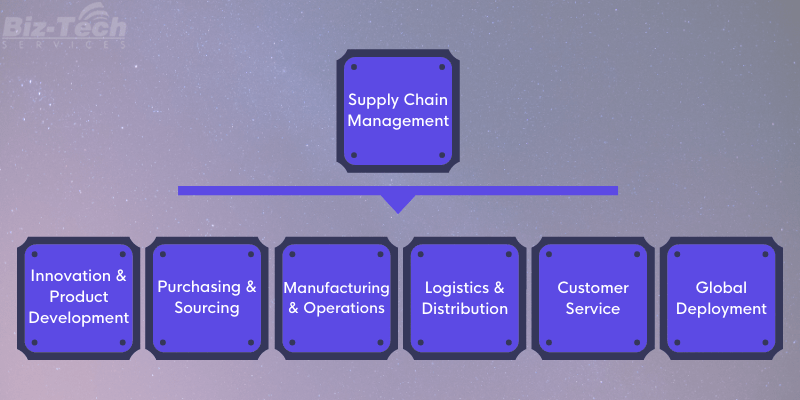
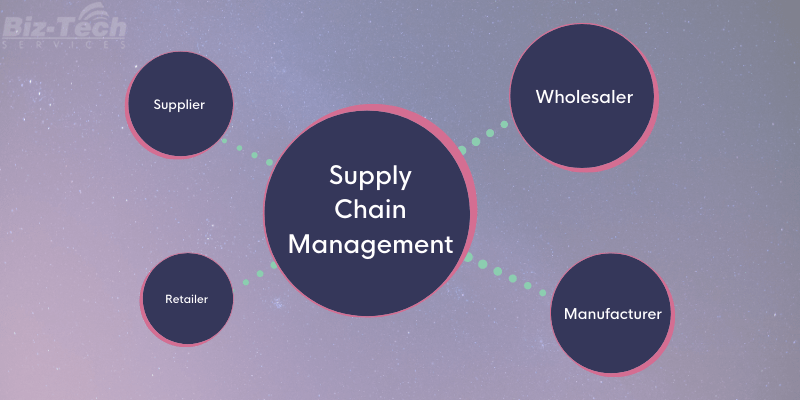
Supply Chain Management (SCM) is the active management of supply chain activities to maximize customer value and achieve a sustainable competitive advantage. It represents a conscious effort by supply chain firms to develop and run SCM in the most efficient and effective ways possible. SCM actives cover everything from sourcing, production, product development, logistics, as well as information systems need to coordinate these activities.
The end result is the combined efforts of a number of organizations working together as a supply chain that helps manage the flow of raw materials and ensures the finished goods provide value. Supply Chain managers work across multiple functions and companies to ensure that goods not only get to the end-user, but also meets all requirements. Logistics is a small part of the grand scheme of things in the SCM world.
What is Logistics?
Logistics is the process of planning and executing efficient transportation and storage of goods from the point of origin to the end-user. The goal is to meet customer requirements in not only a timely manner, but also cost-effective. Many organizations specialize in logistics, providing their services to manufacturers, retails and other industries with transportation needs. Large retailers and manufacturers typically run major areas of their logistics network. However, most companies outsource this function to third-party providers. When we think logistics, we think FedEx, UPS and DHL.
The two major functions of logistics are transportation and warehousing. Transportation management focuses on planning and optimizing the use of vehicles to move goods between warehouses, retailers and customers. This includes transport via ocean, air, rail and roads. Transportation management is an unsurprisingly complex process. This involves the planning and optimization of routes and shipment loads, order management, and freight auditing and payment, all usually done via a transportation management system software (TMS).
Warehousing, more commonly known as warehouse management, includes such functions like order fulfillment and inventory management. This involves managing warehouse infrastructure and processes. Most organizations deploy warehouse management software (WMS) to manage the flow and storage of goods. The majority of ERP vendors offer TMS and WMS modules with a more specialized approach to these specific needs.
Key Differences
Logistics management plays a vital role in supply chain management. Although the two are sometimes used interchangeably, logistics focuses on the moving of materials and products as efficiently as possible. On the hand, SCM covers a much more broad range of supply chain planning (SCP) activities, for example demand planning, sales and operations planning, and supply chain execution.
- SCM is a way to link major business functions and processes within and across organizations into a max-efficiency business model that drives competitive edge.
- Logistics refers to the movement, storage and flow of goods. This includes services and information inside and outside the organization.
- The focus of SCM is gaining a competitive edge, while the main focus of logistics is to meet customer requirements.
- Logistics is a function, or process, within a supply chain.
Logistics ERP And Supply Chain Management ERP
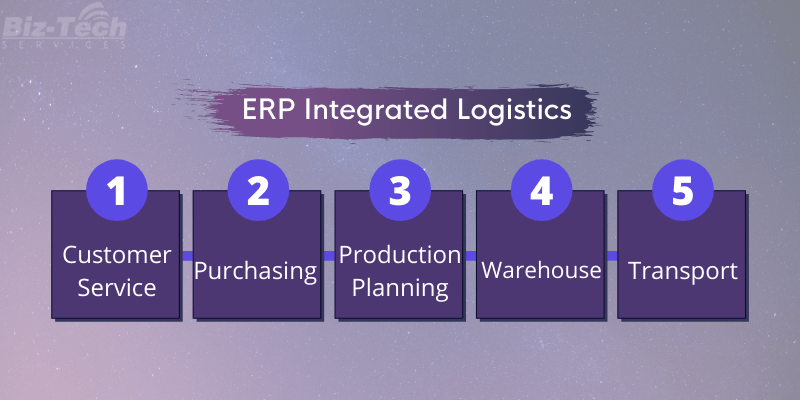
As organizations grow, they begin to recognize the benefits ERP has on logistics management and supply chain management processes. When it comes to managing business information, integrating systems and processes, and ensuring optimal operational efficiency, SCM ERP is king. Although logistics ERP and supply chain ERP are technically two different things, most vendors offer suites that are set up to do both out of the box. For example, Acumatica offers their 'Distribution Edition' which is a cloud-based ERP software that manages both logistics and supply chain activities. Going with a vendor that specializes in both, rather than one, makes life easier as you don't need to rely on two different software and can accomplish the needs of your organization in one suite.
Supply Chain ERP Integration
When integrating ERP with supply chain management systems, what's essentially being done is the supplementation of the SCM system by gathering information about company finances, sales and processes. SCM ERP integration comes with many benefits for distributors and manufactures, including:
- Streamlined Workflows: ERP software aggregates company data in one centralized database. When ERP is fully integrated to supply chain management tools, the need for double entry is reduced and workflows can be streamlined via automation.
- Inventory Optimization: When the SCM is supported with company-wide data, more accurate forecasts and inventory management is accomplished. Keep holding costs at a minimum, while protecting production schedules from disruption due to low inventory.
- Satisfied Customers: With the above in order, an effective supply chain ERP integration means organizations can produce high quality products quickly and deliver them accurately, and on time. These kind of performance boosts are likely to create satisfied customers who place repeat orders.
Logistics ERP Integration
ERP systems assist logistics management by reducing risks and company cost. Some of the ways logistics ERP can benefit organizations include:
- Inventory Management: With a centralized system in place, the data required for logistics management can be captured in one place. This includes orders, inbound and outbound sales, and deliveries. This allows companies to make more informed decisions and forecasts using historical data that the ERP software provides.
- Distribution Management: Manage flows and distributions effectively by gathering necessary information. The ERP system can manage the transportation of goods, ensuring customers and supplies receive products in a timely manner. The system also allows for live communication between drivers and coordinators, sending traffic updates, customer addresses, and emergency information.
- Reduced Costs: With accurate and real-time data that ERP systems provide, this allows companies to reduce monthly expenses, being able to make more informed decisions quicker and accurately. In some situations, cost savings can come from staff reduction due to how well ERP systems can manage logistic activities.
Acumatica Solutions
Distribution management is Cloud ERP software that helps companies manage their supply chain and logistics activities, including warehouse management, inventory management, and order management (sales and purchase orders). It integrates these activities with the company’s financials and sales. Wholesale distribution software can help companies improve customer satisfaction, reduce order times, and control costs across the entire supply and distribution chain.
Acumatica Distribution Edition includes Sales Order Management, Advanced Inventory, Requisition Management, Purchase Order Management, and Advanced Financials. It is fully integrated with Acumatica’s Warehouse Management System (WMS), Customer Relationship Management (CRM), Manufacturing, Field Service, and Project Accounting. Information only needs to be entered once for visibility across all modules and the entire business organization. Cloud access with the mobile application framework enables distributors to manage the entire sales cycle from opportunity to sales order processing in the office, on the road, or from a home office. Process purchase orders, transfer stock, and manage inventory levels remotely via phone, tablet, or laptop.
SCM ERP & Logistics ERP Impact
If ERP integration for logistics and supply chain management is a logical business move for you, it's vital to choose vendors that provide what you're looking for. As mentioned above, Acumatica offers an all-in-one ERP suite that puts logistics ERP and SCM ERP efficiency in your hands. Here at Biz-Tech, we're certified Acumatica partners and can adapt a variety of ERP products to meet your organizations unique SCM and logistics management needs, with full support throughout the implementation process. To see how knowledgeable ERP consultants could help you take control, contact us.